
Children
Overview
In the American Community Survey, there are tables specifically focused on data about children, others relating to fertility, and a good number more that are about other topics but include information about children.
This tool also includes data from the Michigan Department of Health and Human Services which collects a number of vital statistics, including data from the birth certificates of each birth recorded in the state. Through this data we report a variety of health indicators and demographic information related to births. If there are fewer than 10 observations for any part of a data table, the information is suppressed for privacy reasons.
All data sources are from the American Community Survey unless otherwise noted.
Indicators on the Profile Page |
Why It's Important |
|---|---|
Children |
|
|
|
Indicators on the Profile Page |
Why It's Important |
|---|---|
Births |
|
|
|
Indicators on the Profile Page |
Why It's Important |
|---|---|
Fertility |
|
|
|
Methodology
The births dataset contains a row for each birth in the State of Michigan. Each birth record contains geographic information such as a census tract or latitude and longitude. When latitude and longitude are provided for a birth, D3 tags the record with the related census tract and then adds all of the births in that tract together. Where the location data is not available, the record is removed from the dataset.
Births Data Table
Columns |
Description |
|---|---|
Births Data: D3-Births table |
|
| Non-Hispanic White Births | Births to mothers identified as White and non-Hispanic |
| Non-Hispanic Black Births | Births to mothers identified as Black and non-Hispanic |
| Non-Hispanic Other Race Births | Births to mothers identified as not Hispanic, Black, or White |
| Hispanic Births | Births to mothers identified as Hispanic |
| Births with Less than Adequate Prenatal Care | Less than adequate prenatal care was defined as births rated “inadequate” or “intermediate” on the Kessner Index† |
| Low Birth Weight Births | Infants weighing under 2,500 grams were considered a low weight birth |
| Preterm Births | Births where the calculated weeks of gestation were fewer than 37 weeks |
| Births to Teen Mothers | Births to mothers under 20 years old |
|
†Kessner Index The Kessner Index is a classification of prenatal care based on the month of pregnancy in which prenatal care began, the number of prenatal visits and the length of pregnancy (i.e. for shorter pregnancies, fewer prenatal visits constitute adequate care.) Kessner Index Measurement Definitions: |
|
American Community Survey Data
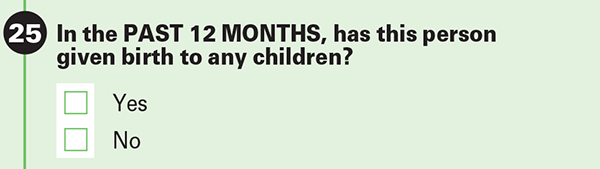
Sample Survey Questions on this Topic
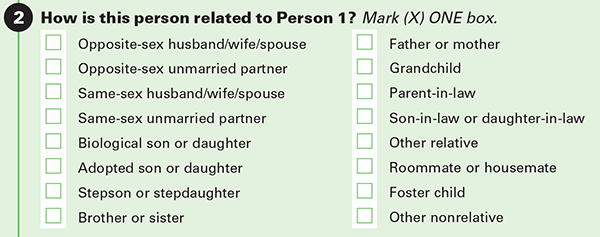
From the Census: Why We Ask: Family / Relationship to Householder
From the Census: Why We Ask: Fertility
Children
The ACS tables beginning with 09 are about children and relationships. In the listing below, table names have been simplified in some cases. References to children and grandchildren almost always mean under 18 years old. Income is for the last 12 months, adjusted for inflation to the value of dollars in the last year of the survey period. References to poverty status/level, receipt of food stamps/SNAP, and work status are all for the last 12 months.
| Code | Title |
|---|---|
Children |
|
| B09001 | Population Under 18 Years by Age |
| B09002 | Own Children by Family Type and Age |
| B09005 | Household Type for Children in Households (Excluding Householders, Spouses, and Unmarried Partners) |
| B09010 | Receipt of Supplemental Security Income (SSI), Cash Public Assistance Income, or Food Stamps/SNAP by Household Type for Children in Households |
| B09018 | Relationship to Householder for Children in Households |
| B09019‡ | Household Type (Including Living Alone) by Relationship |
| B09020 | Relationship by Household Type (Including Living Alone) for the Population 65 Years and Over |
| B09021 | Living Arrangements of Adults 18 Years and Over by Age |
|
‡Table also available in "collapsed" version: change "B" to "C" for table code. |
|
Fertility
The ACS asks about women who have given birth in the last 12 months to better understand changing household dynamics and population growth.
| Code | Title |
|---|---|
Fertility |
|
| B13002† | Women Who Had a Birth by Marital Status and Age |
| B13004 | Own Children by Family Type and Age |
| B13008 | Household Type for Children in Households (Excluding Householders, Spouses, and Unmarried Partners) |
| B13010 | Receipt of Supplemental Security Income (SSI), Cash Public Assistance Income, or Food Stamps/SNAP by Household Type for Children in Households |
| B13012 | Relationship to Householder for Children in Households |
| B13014 | Household Type (Including Living Alone) by Relationship |
| B13015 | Relationship by Household Type (Including Living Alone) for the Population 65 Years and Over |
| B13016 | Living Arrangements of Adults 18 Years and Over by Age |
|
†Also available in racial iterations. |
|
Other ACS Tables That Include Children
| Code | Title |
|---|---|
| B05009‡ | Age and Nativity of Own Children in Families and Subfamilies by Number and Nativity of Parents |
| B05010‡ | Ratio of Income to Poverty Level by Nativity of Children in Families and Subfamilies by Living Arrangements and Nativity of Parents |
| B10001 | Grandchildren Living With a Grandparent Householder by Age of Grandchild |
| B10002 | Grandchildren Living With a Grandparent Householder by Grandparent Responsibility and Presence of Parent |
| B10010 | Median Family Income for Families With Grandparent Householders And/or Spouses Living With Own Grandchildren by Responsibility for Own Grandchildren and Presence of Parent of Grandchild |
| B10050 | Grandparents Living With Own Grandchildren by Responsibility for Own Grandchildren by Length of Time Responsible for Own Grandchildren |
| B10051† | Grandparents Living With Own Grandchildren by Responsibility for Own Grandchildren by Presence of Parent of Grandchildren and Age of Grandparent |
| B10052 | Disability Status of Grandparents Living With Own Grandchildren by Responsibility for Own Grandchildren and Age of Grandparent |
| B10053 | Nativity by Grandparents Responsible for Own Grandchildren by Age of Grandparent |
| B10054 | Language and Ability to Speak English of Grandparents Living With Own Grandchildren by Responsibility for Own Grandchildren and Age of Grandparent |
| B10056 | Sex of Grandparents Living With Own Grandchildren by Responsibility for Own Grandchildren and Age of Grandparent |
| B10057 | Marital Status by Grandparents Living With Own Grandchildren by Responsibility for Own Grandchildren and Age of Grandparent |
| B10058 | Employment Status of Grandparents Living With Own Grandchildren by Responsibility for Own Grandchildren and Age of Grandparent |
| B10059 | Poverty Status of Grandparents Living With Own Grandchildren by Responsibility for Own Grandchildren and Age of Grandparent |
| B10063 | Households With Grandparents Living With Own Grandchildren by Responsibility for Own Grandchildren and Presence of Parent of Grandchildren |
| B11003 | Family Type by Presence and Age of Own Children |
| B11004 | Family Type by Presence and Age of Related Children |
| B11005‡ | Households by Presence of People by Household Type |
| B11008 | Cohabiting Couple Households by Presence and Age of Own Children |
| B11013 | Subfamily Type by Presence of Own Children |
| B17006‡ | Poverty Status of Related Children by Family Type by Age of Related Children |
| B17010†‡ | Poverty Status of Families by Family Type by Presence of Related Children by Age of Related Children |
| B17012‡ | Poverty Status of Families by Household Type by Number of Related Children |
| B17022‡ | Ratio of Income to Poverty Level of Families by Family Type by Presence of Related Children by Age of Related Children |
| B17023‡ | Poverty Status of Families by Household Type by Number of Own Children |
| B19125 | Median Family Income by Presence of Own Children |
| B19126 | Median Family Income by Family Type by Presence of Own Children |
| B19128 | Aggregate Family Income by Family Type by Presence of Own Children |
| B19131‡ | Family Type by Presence of Own Children by Family Income |
| B22002 | Receipt of Food Stamps/SNAP by Presence of Children by Household Type for Households |
| B23003 | Presence of Own Children by Age of Own Children by Employment Status for Females 20 to 64 Years |
| B23007‡ | Presence of Own Children by Family Type by Employment Status |
| B23008‡ | Age of Own Children in Families and Subfamilies by Living Arrangements by Employment Status of Parents |
| B23009 | Presence of Own Children by Family Type by Number of Workers in Family |
| B23010 | Presence of Own Children in Married-couple Families by Work Experience of Householder and Spouse |
| B25012 | Tenure by Families and Presence of Own Children |
| B25115 | Tenure by Household Type and Presence and Age of Own Children |
|
‡Table also available in "collapsed" version: change "B" to "C" for table code. †Also available in racial iterations. |
|